Join the Webinar & See RFP360.ai in Action – May 6 & 7
Join the Webinar & See RFP360.ai in Action – May 6 & 7


July 7, 2026
Ready to stop rewriting proposals from scratch?
Proposal Strategy Guide
A good proposal does more than explain what your company offers. It shows the client that you understand their needs, their goals, and the problem they are trying to solve. That is what tailoring a proposal means.
A tailored proposal is written for a specific client, project, or request for proposal. It does not feel copied from an old document. Instead, it speaks directly to the buyer’s situation and explains why your solution is the right fit.
Whether you are responding to a formal RFP process or sending a business proposal to a private company, customizing your response can improve your chances of winning. In this guide, we will explain how to tailor proposals in a simple, practical way and how proposal automation software and proposal management software can make the process easier.
Tailoring a proposal means adjusting your message, solution, examples, and structure to match the client’s needs. It is not about rewriting everything from zero each time. It is about making sure your proposal feels relevant to the person reading it.
For example, two clients may both need software development services. One may care most about security and compliance. Another may care about speed, user experience, and cost savings. Your core service may be the same, but your proposal should highlight different strengths for each client.
A tailored proposal answers the client’s main question: “Why is this vendor the right choice for us?”
Clients can quickly recognize a generic proposal. If your response sounds like it could be sent to anyone, the buyer may feel that you did not fully understand their needs.
A tailored proposal helps build trust. It shows that you read the requirements carefully, understand the project, and have a clear plan to help. This is especially important during a request for proposal, where buyers often compare several vendors side by side.
A customized proposal can help you:
The goal is not to make the proposal longer. The goal is to make it more useful and focused.
Before writing, read the request for proposal from beginning to end. Do not rush this step. Many proposals lose points because they miss simple instructions.
Look for the client’s goals, required services, timeline, budget, evaluation criteria, submission format, and mandatory documents. Also pay attention to repeated words or themes. If the client keeps mentioning “efficiency,” “security,” or “supplier evaluation,” those ideas should appear naturally in your response.
Create a simple checklist while reading. Include every required section, document, form, and answer. This will help you stay organized during the RFP process and avoid last-minute mistakes.
A client may ask for a product or service, but there is usually a deeper reason behind the request. Your job is to understand that reason.
For example, a company may ask for proposal management software. But the real issue may be that their team is tired of searching old documents, chasing approvals, and managing different versions of the same proposal.
A government agency may ask for IT support. But the deeper need may be better system reliability, stronger security, or faster response times.
• What problem is the client trying to solve?
• What risk are they trying to reduce?
• What outcome do they want?
• What would success look like for them?
When you understand the real problem, your proposal becomes more meaningful.
Once you understand the client’s needs, explain your solution in a way that connects directly to those needs.
Avoid listing every service your company provides. Instead, focus on what matters most for this opportunity.
For example, instead of writing:
“We provide consulting, implementation, training, reporting, and support services.”
You could write:
“For this project, our approach focuses on smooth implementation, clear communication, user training, and reliable support after launch.”
The second version feels more specific and helpful.
This is where proposal automation software can support your team. It can help store approved content, past responses, company details, and reusable proposal sections. You can then use that content as a starting point and customize it for each opportunity. Learn more about proposal automation software.
One simple way to tailor a proposal is to use the client’s own language. This does not mean copying their document word for word. It means reflecting their priorities in your response.
If the client says they want to “reduce manual review work,” use that phrase naturally when explaining your solution. If they mention “transparent scoring,” explain how your process supports transparent scoring.
For example:
“Our approach helps reduce manual review work by organizing responses, tracking progress, and supporting a more consistent evaluation process.”
This helps the evaluator quickly connect your answer to their requirement.
The executive summary is one of the most important parts of your proposal. It is often the first section the buyer reads, so it should not sound generic.
A strong executive summary should include:
Instead of starting with a long company introduction, begin with the client’s need.
For example:
“Your organization is looking for a faster and more consistent way to manage proposal reviews across multiple departments. Our approach focuses on clear workflows, organized documentation, and better visibility so your team can make confident decisions.”
This feels more client-focused than simply saying your company is experienced.
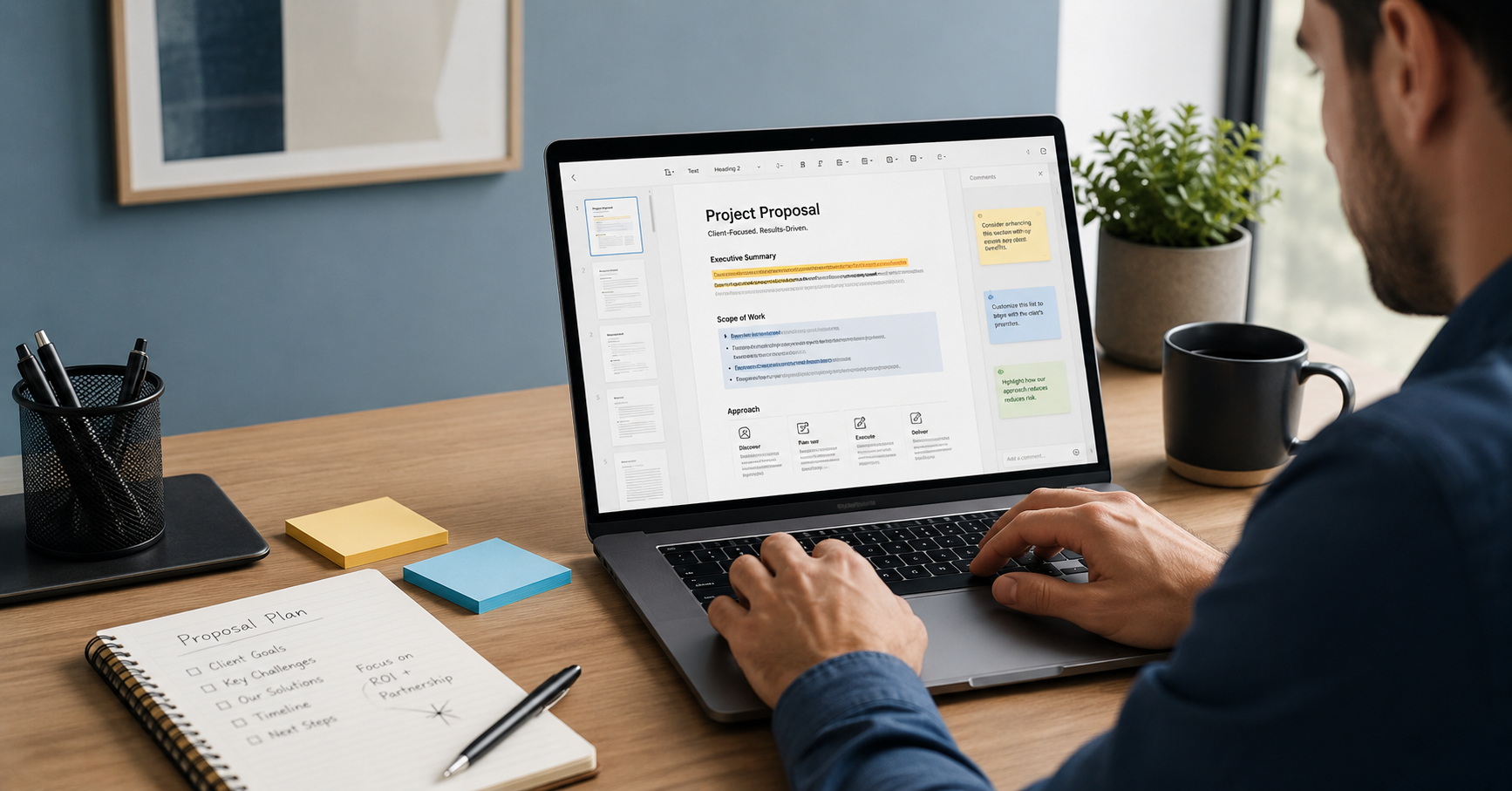
Clear, client-focused writing is what separates a template from a tailored proposal.
Clients want evidence that you can deliver. But not all proof is equally helpful. Choose examples that match the client’s industry, project type, or challenge.
Relevant proof may include similar projects, past performance, case studies, certifications, client results, or team experience.
For example, if the client needs help improving the RFP process, mention a project where you helped organize proposal workflows, improve review speed, or reduce manual tracking.
Keep your proof focused. A few strong examples are better than a long list of unrelated experience.
A tailored proposal should also be easy to read. Evaluators are busy, and they may be reviewing many proposals at once.
Use clear headings, short paragraphs, simple language, and organized sections. Answer questions in the same order the client asks them. Use tables when they make information easier to compare.
This is especially helpful in a formal RFP process because evaluators may score each answer against specific requirements. If they cannot find the answer quickly, your score may suffer.
Proposal management software can help teams organize tasks, assign sections, track deadlines, manage documents, and keep everyone working from the latest version. Learn more about proposal management software.
Many proposals include a standard project approach, but a stronger proposal explains how that approach fits the client’s situation.
Instead of saying:
“We will complete discovery, planning, implementation, testing, and support.”
You could say:
“We will begin with a discovery session to understand your current workflow, key users, approval steps, and reporting needs. This helps ensure the final solution fits the way your team actually works.”
This small change makes your approach feel more thoughtful and specific.
Every project has risks. A good proposal does not ignore them. It shows the client that you are prepared.
Common risks include delayed approvals, unclear requirements, limited staff availability, data issues, or tight timelines. You can include a simple risk table with the risk, possible impact, and mitigation plan.
| Risk | Impact | Mitigation |
|---|---|---|
| Key reviewers are unavailable. | Decisions may be delayed. | Schedule review checkpoints early and assign backup reviewers. |
This shows the buyer that you are realistic and organized.
For more general guidance, you can refer to trusted public procurement resources and recognized project management best practices.
Before submitting, review the proposal from the buyer’s point of view.
Ask:
A final review can catch mistakes and improve the overall quality of your submission.
Tailoring proposals manually can take a lot of time, especially when teams are working on several opportunities at once.
Proposal automation software helps by reducing repetitive writing, suggesting reusable content, and creating a strong first draft. Proposal management software helps by keeping the full process organized, from assignments and deadlines to reviews and final submission.
These tools do not replace human judgment. Your team still needs to review, edit, and personalize the content. But they can save time, reduce stress, and help create more consistent proposals.
Tailoring a proposal is one of the simplest ways to improve your chances of success. It shows the client that you understand their needs and have a clear plan to help.
Start by reading the request carefully. Understand the real problem. Match your solution to the client’s goals. Use relevant examples. Make the proposal easy to review. Then check everything before submitting.
A strong proposal is not just about your company. It is about the client, their challenge, and the value you can provide. When your proposal feels personal, clear, and useful, you give the buyer a stronger reason to choose you.
Put This Into Practice
See how proposal automation and management software help your team draft, organize, and submit tailored proposals faster.